

The Confederation of African Football (CAF) has reported a net profit of $31.2 million for the 2025–2026 financial year, marking a major improvement in the organisation’s financial position and strengthening its capacity to invest in football development across the continent.
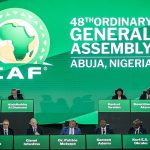
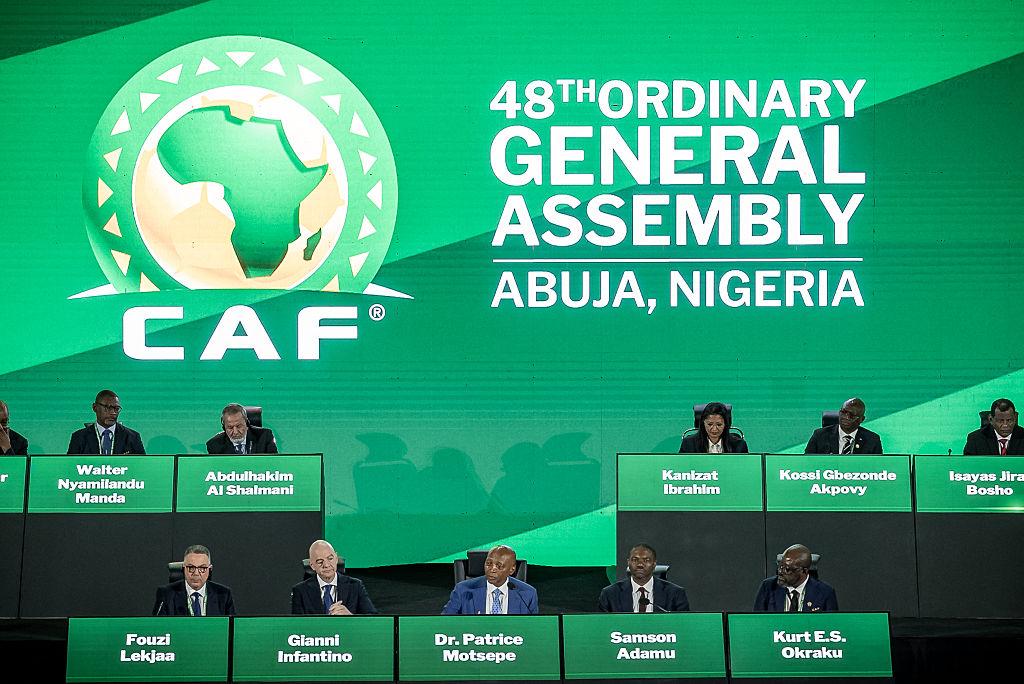
The figures were presented at CAF’s 48th Ordinary General Assembly in Abuja, Nigeria, on 21 November, where the continental governing body also reported total revenue of $284 million.
CAF says the results reflect a significant financial turnaround compared with the situation five years ago, when the organisation was dealing with debt exceeding $100 million.
The improved financial position comes at a time when African football is seeking greater investment in competitions, clubs, national associations, youth development and women’s football.
Revenue reaches $284 million
CAF reported that its total revenue increased to $284 million, while the organisation recorded a net surplus of $31.2 million during the financial year.
Its reserves also improved, moving from a deficit of $16.8 million to a positive balance of $14.4 million.
CAF further reported a cash balance of $118.8 million at the end of June 2026.
The organisation attributed the improvement to its financial turnaround strategy, increased commercial revenues and stronger investment in its competitions.
The 2025 Africa Cup of Nations in Morocco was a major contributor, with CAF reporting that the tournament generated more than $100 million and attracted a record 23 commercial partners.
The figures indicate that African football’s commercial value is increasing, particularly around major continental competitions.
National associations receive increased funding
One of the most significant developments for African football federations is the increase in annual financial support.
CAF has raised the maximum annual allocation to each of its 54 member associations from $525,000 to $700,000, effective July 2026.
The latest increase represents a 33% rise, while the allocation has grown by 250% compared with the $200,000 provided annually in 2021.
CAF has stated that its longer-term objective is to provide $1 million annually to each member association.
The increased funding is intended to support football development programmes, administration, governance, youth football and women’s football.
For national associations such as Uganda’s FUFA, these allocations can provide additional resources to strengthen domestic football structures and improve the organisation of competitions and development programmes.
However, the impact will ultimately depend on how the funds are managed, allocated and translated into measurable improvements within each country.
Investment in clubs and competitions also rises
CAF says its financial investment in African clubs has increased to $48 million, up from $19 million in 2021.
The winners of the CAF Champions League now receive $6 million, compared with $2.5 million five years ago.
The Confederation Cup winners receive $4 million, up from $1.25 million over the same period.
CAF has also increased solidarity payments to clubs eliminated during preliminary rounds of its interclub competitions from $50,000 to $100,000 per club.
These changes are intended to improve the financial competitiveness of African club football and provide additional support to teams participating in continental competitions.
Women’s football receives a major boost
Women’s football has also benefited from increased financial investment.
CAF reported that the prize money for the Women’s Africa Cup of Nations winners increased to $2 million in 2026, compared with $200,000 in 2021.
The overall WAFCON prize fund has risen to $5.8 million, while the tournament expanded from 12 to 16 participating teams.
These investments represent a substantial increase in financial recognition for women’s football and provide an opportunity to strengthen the commercial and competitive development of the women’s game.
The challenge will be ensuring that the increased funding supports sustainable development beyond the tournament itself.
Financial recovery brings greater expectations
CAF’s improved financial position is encouraging, but it also raises expectations about transparency, accountability and the delivery of football development programmes.
A profitable governing body is better positioned to invest in its competitions and member associations. However, financial results alone do not establish whether resources are reaching grassroots football, clubs, players and communities effectively.
The next phase of CAF’s financial development will therefore be judged not only by revenue and reserves, but also by the measurable impact of its investment.
Freekick442 Verdict
CAF’s reported financial turnaround is an important development for African football.
Increased funding for national associations, clubs and women’s competitions could help address longstanding challenges relating to infrastructure, youth development and competitiveness.
But the real success of the financial recovery will be determined by what African football delivers with the money.
Stronger grassroots programmes, better-organised domestic leagues, improved facilities, professional administration and greater opportunities for players should ultimately be the measures of progress.