



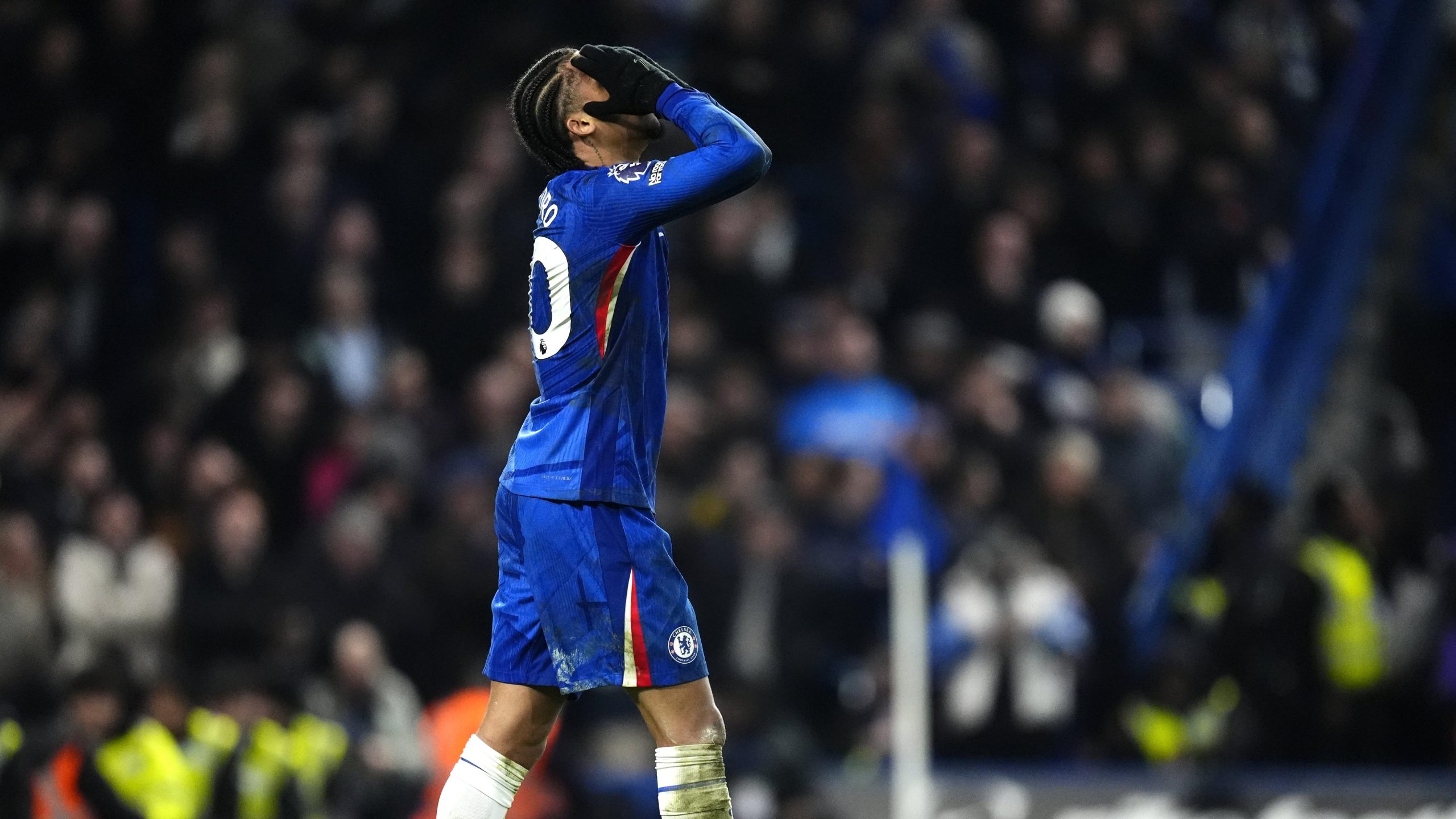
Chelsea’s 4–1 defeat against Leeds United at Stamford Bridge was more than an unexpected Premier League result. It was another uncomfortable reminder that, despite the quality within the squad and the expectations surrounding Xabi Alonso’s appointment, Chelsea are still struggling to establish themselves as a consistent and reliable team.
For a club with ambitions of challenging for major honours, losing at home is disappointing enough. Losing in the manner Chelsea did against Leeds raises much bigger questions about their mentality, defensive organisation and ability to respond when matches become difficult.
The result also marked Chelsea’s third Premier League defeat in four matches, leaving them eighth in the table and increasing the pressure on Alonso.
The problem is bigger than one bad afternoon
Chelsea actually started the scoring through Emmanuel Emegha, who found the net in the 25th minute on his first Premier League start.
However, the advantage lasted only three minutes before Noah Okafor equalised for Leeds.
From that moment, Chelsea appeared to lose control of the contest.
Leeds played with greater confidence, intensity and attacking purpose, eventually scoring four times through Okafor, Dominic Calvert-Lewin and Brenden Aaronson.
The statistics tell an equally uncomfortable story. Leeds registered 21 shots compared with Chelsea’s 14 and created seven big chances, while Chelsea failed to create a single big chance.
These numbers suggest that the defeat was not simply the product of poor finishing or an unfortunate defensive mistake. Leeds were the more threatening team for much of the contest.
Alonso must find answers to Chelsea’s defensive problems
One of the most concerning aspects of Chelsea’s recent performances is their defensive vulnerability.
The Blues have now conceded 20 Premier League goals this season, a worrying statistic for a team expecting to compete near the top of the table.
The problem is not limited to the defenders themselves. Chelsea have struggled to maintain collective organisation when opponents apply pressure, attack quickly or exploit spaces between the defensive and midfield lines.
The forced withdrawal of Moisés Caicedo in the 22nd minute certainly affected the team’s balance against Leeds. Nevertheless, a club with Chelsea’s squad investment should have sufficient depth to cope with the absence of an important midfielder.
Alonso himself acknowledged the team’s mental fragility after the match, admitting that Chelsea lost belief following Leeds’ equaliser.
That admission is significant. Tactical problems can be addressed through training, adjustments and personnel changes, but a team that loses confidence so quickly needs a much stronger collective response.
Chelsea cannot keep relying on individual brilliance
Chelsea possess players capable of changing matches through individual quality, but that cannot become their primary strategy.
A successful team needs a recognisable playing identity, coordinated movement and the ability to manage difficult periods without losing its structure.
Against Leeds, Chelsea appeared increasingly disconnected as the match progressed. Their attacking players struggled to create meaningful opportunities, while the defensive unit failed to contain the visitors’ movement.
The absence of João Pedro has also exposed some limitations in the attacking department, but relying heavily on one player is not a sustainable approach for a club with European ambitions.
Alonso must develop alternatives that allow Chelsea to remain competitive even when key players are unavailable.
Should Chelsea supporters start worrying?
There is no reason to suggest that Chelsea’s season is beyond recovery. The squad possesses considerable talent, and Alonso has enough managerial experience to understand the demands of rebuilding a competitive team.
However, patience should not become an excuse for ignoring repeated problems.
The club needs to see tangible improvements in defensive organisation, midfield control and the team’s ability to respond to setbacks.
Chelsea have already experienced several disappointing results, and another sequence of poor performances could make their ambitions of returning to the Champions League increasingly difficult.
The challenge for Alonso is to show that this team can learn from defeat rather than repeatedly make the same mistakes.
Our Verdict
Chelsea’s defeat against Leeds should be treated as a serious warning rather than an isolated bad result.
Alonso deserves the opportunity to build his project, but that opportunity must come with accountability and measurable progress.
The quality is there. The investment is there. What Chelsea still need is a team that consistently performs with the organisation, confidence and determination expected of a major Premier League club.
Until that happens, Stamford Bridge supporters may continue to experience more frustrating afternoons like this one.